
Popular Types of Kitchen Countertops – Austin, Texas
Written by Roy Faust
Updated August 2026
From granite to quartz, your countertop is one of the biggest style and function decisions in a kitchen remodel. After kitchen cabinets, the feature that offers the best style impact in the kitchen is countertops. There are many types of kitchen countertops to choose from — including quartz, granite, marble, soapstone, wood, solid surface, and stainless steel. Before you pull out your wallet, eager to install the most popular design, you want to consider a few things.
- Location: Where will the countertops go, and will the style be attractive not only in the cooking space but in adjoining living or dining areas?
- Use: How often do you cook? Do you need a material that withstands daily use, or will it primarily serve visual appeal?
- Connective space: How will the countertop look around adjoining elements such as your sink or stovetop? Consider the overall design of your kitchen.
- Cleaning: How much time are you willing to invest in regular maintenance?
No matter how you’ve answered the above, there’s a kitchen countertop for you. Current eclectic kitchen styles embrace mixing materials, so you don’t have to worry too much about matching — you can choose one material for the island and another for the perimeter, or treat yourself to a small slab of marble for a bar space. To achieve the best results, work with a professional certified to fabricate and install the particular material you choose.
Read on for the most popular types of kitchen countertops Austin homeowners install, and the pros and cons of each.
Quartz vs. Granite: Which Should You Choose?
This is the most common countertop question we hear, so let’s answer it up front. Both are excellent; they’re just different.
Granite is 100% natural stone. Every slab is unique, it handles heat beautifully, and it has a depth of pattern engineered materials can’t quite copy — but it’s porous, so it needs sealing to stay stain-resistant.
Quartz is engineered — roughly 90% ground natural quartz bound with resin. It’s non-porous, so it never needs sealing, resists stains and bacteria, and offers a huge range of consistent colors and patterns — but very hot pans can damage the resin, so you’ll want trivets.
The short version: choose granite if you want a one-of-a-kind natural stone and don’t mind occasional sealing. Choose quartz if you want the lowest-maintenance, most consistent surface available. Full details on each are below.
Marble Countertops
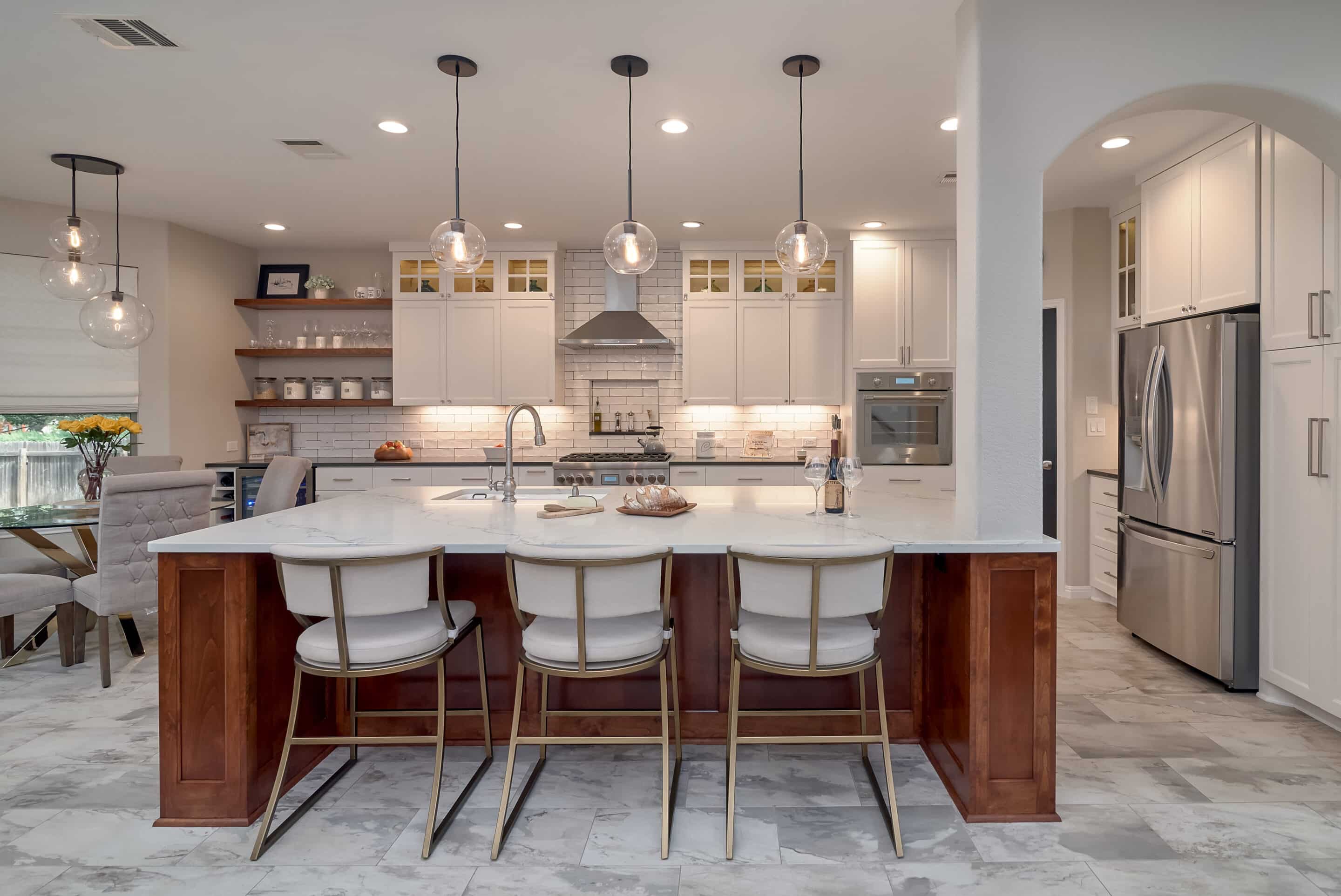
Sought for its classic beauty, marble draws its fans among homeowners who want to have a stone material in their kitchen. Marble countertops are more porous than granite, and this factor—combined with a high price tag—limits its application to select areas of the kitchen, such as entertaining or baking areas. Remember that this particular material enjoyed pride-of-place in grand homes in the last two centuries, so if you are up for classic elegance that yields a timeworn patina, this could be the countertop for you.
Pros of marble kitchen countertops
- Withstands high heat
- Adds a high-quality, luxurious look suitable for traditional or contemporary kitchens
- Stays cool, which makes it good for rolling out dough
- Pairs beautifully with many other surfaces, particularly with wood and metal
Cons of marble kitchen countertops
- A premium material that is softer and more porous than granite or quartz
- Limited color range (mostly whites, grays, and blacks)
- Stains, scratches, cracks, and chips more easily than other stones
- Requires periodic sealing and may still discolor over time
Engineered Quartz Countertops
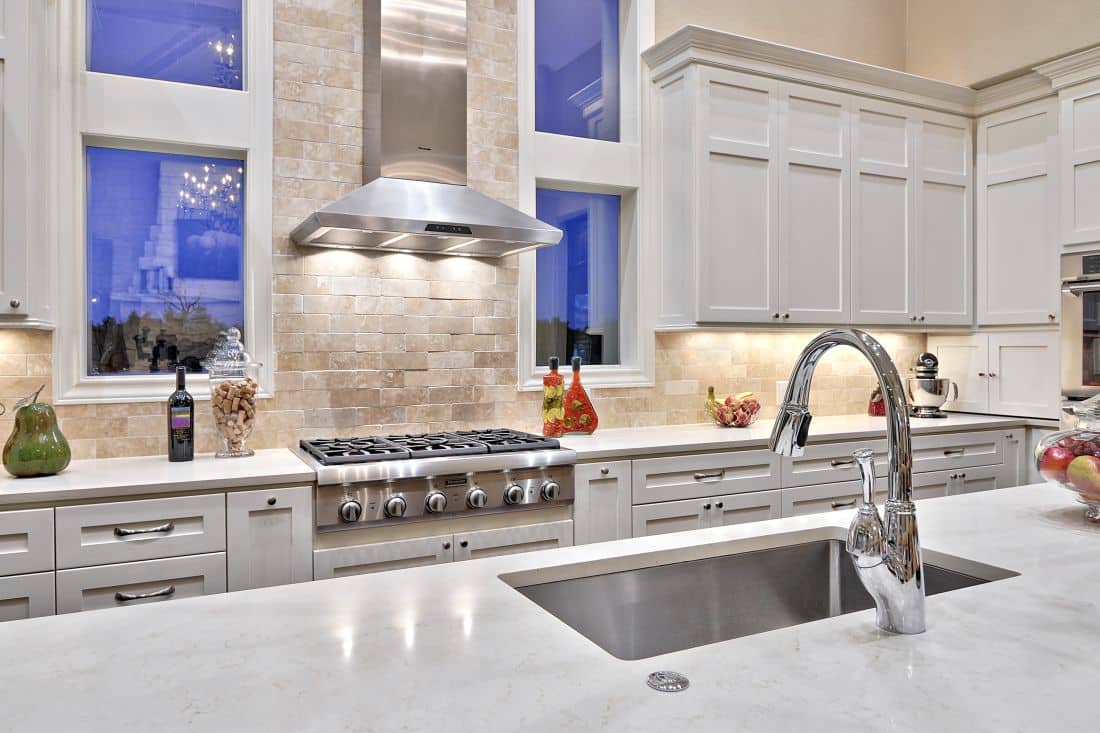
Of all the types of kitchen countertops, engineered quartz — sometimes called engineered stone — is one of the toughest surfaces on the market. It’s typically about 90% quartz mixed with pigments and resin, then formed under pressure into dense slabs.
Manufacturers such as Caesarstone, Silestone, and Dekton offer a vast array of looks, from the whitest whites to the blackest blacks and everything between. Its resistance to stains, scratches, and everyday wear makes it one of the most popular kitchen countertops, edging out granite.
Pros of engineered quartz countertops
- Most impervious of all surfaces by resisting heat, stains, scratches, bacteria, and fading
- Huge selection of patterns and colors, including faux stones and custom colors
- Can be fabricated into nearly any shape you want, and requires no sealing or special maintenance
Cons of engineered quartz countertops
- Faux stone doesn’t have the appearance of real stone
- May crack on sudden impact with a heavy object
- Not heatproof — very hot pans can damage the resin, so use trivets
- Solid-colored slabs will show seams
Granite Countertops
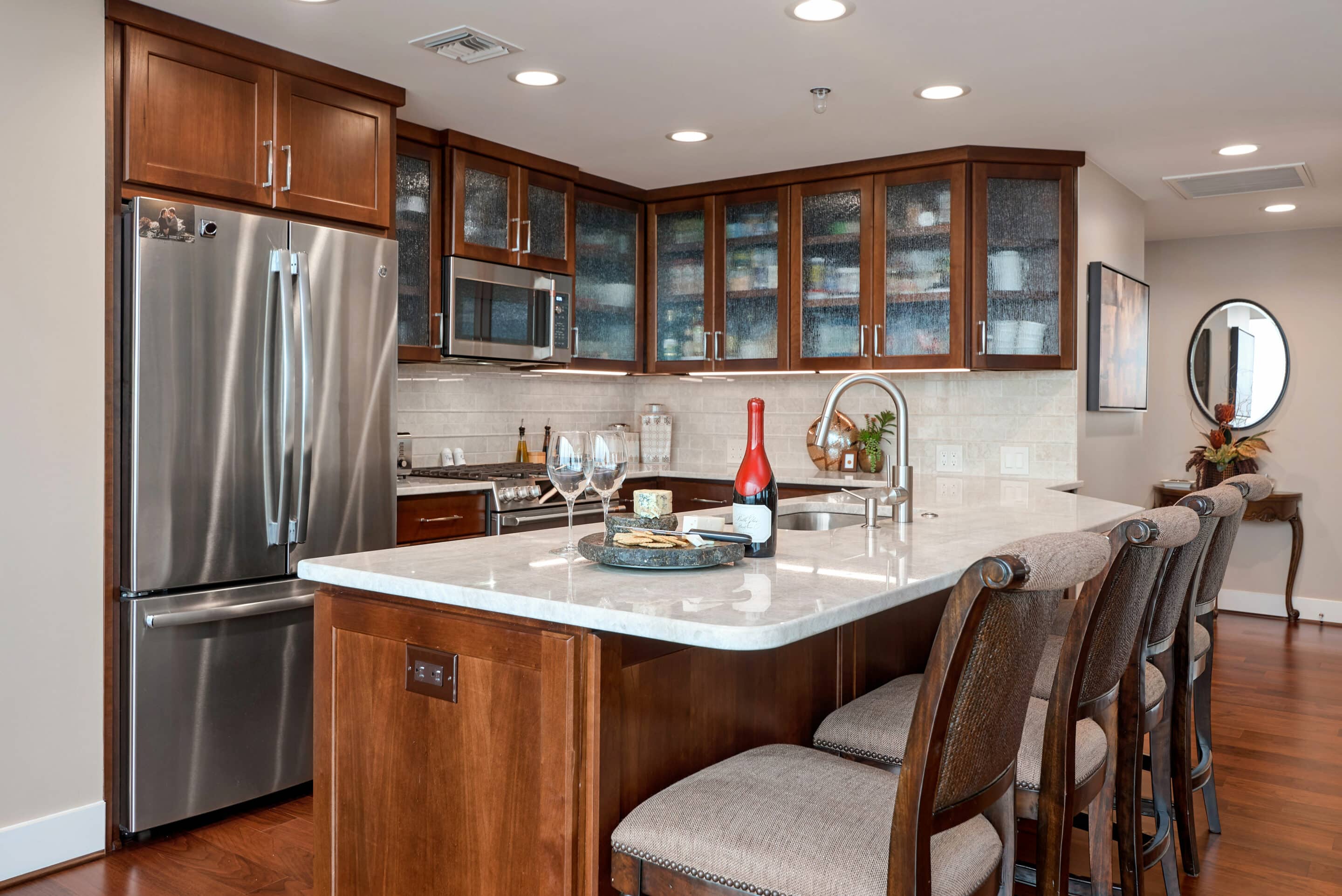
Granite landed on the kitchen scene a little over two decades ago and remains a popular choice for kitchen countertops. It’s a close second behind the number one choice, engineered quartz, according to a survey from the National Kitchen and Bath Association.
Why do granite countertops remain popular? The material combines unique beauty with durability and low maintenance. The natural grain means no two slabs will look identical. While very hard and impervious to heat, granite is porous, so it needs to be sealed at least annually, which can be done easily enough with hand application by sponge.
Pros of granite countertops
- Resists high heat
- Comes in a wide range of colors and grains
- Each slab has a unique appearance
- Maintains its value when well cared for, including sealing annually
Cons of granite countertops
- Porous — needs sealing at least annually to resist stains
- Shows wear from knives and spills such as vinegar, citrus juice, or oils, so the use of a cutting board on top helps maintain longevity
- Requires regular maintenance, which can be accomplished as a DIY project with a sealant and a sponge
- Will crack if improperly installed or a heavy object makes an impact
Wood Countertops
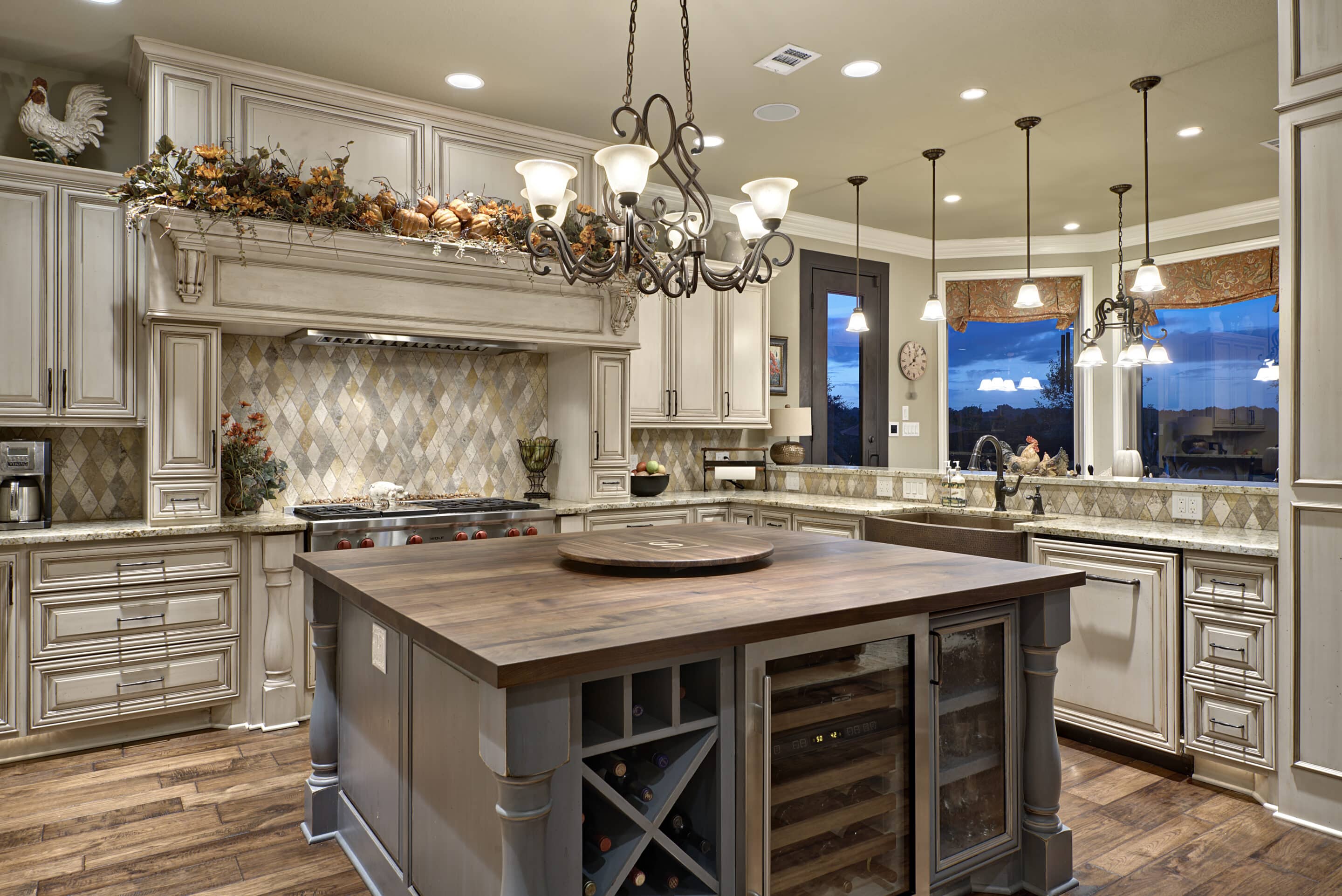
What is likely America’s earliest type of kitchen countertop, wood is still a desirable choice for its natural beauty and warmth. Wood countertops can take moderate heat, but will show burns, dings, and knife cuts. Fans consider the patina part of the appeal. Most damage can be sanded out but be sure to reapply food-safe mineral oil after any repair.
Avoid installing wood countertops in areas such as the sink as prolonged exposure to moisture will cause it to swell. Clean these countertops with a damp sponge and mild detergent. Hardwoods such as maple and oak are most commonly used as wood kitchen countertops, in a butcher-block pattern, which provides additional strength. Another pro of wood countertops: they’re a thriftier choice than many of the other types of countertops described in this post.
Pros of wood countertops
- Easy to clean and repair
- Good for cutting and chopping and knives won’t dull with contact
- Won’t chip and objects dropped on it are less likely to break
- Provides a rich, warm, natural look few other materials match
Cons of wood countertops
- Vulnerable to moisture, chemicals, and high heat, which cause permanent damage
- Immediately shows signs of use
- Expands or contracts with extreme swings in a moist environment
- Requires food-safe sealant and regular care to preserve the surface
Soapstone Countertops
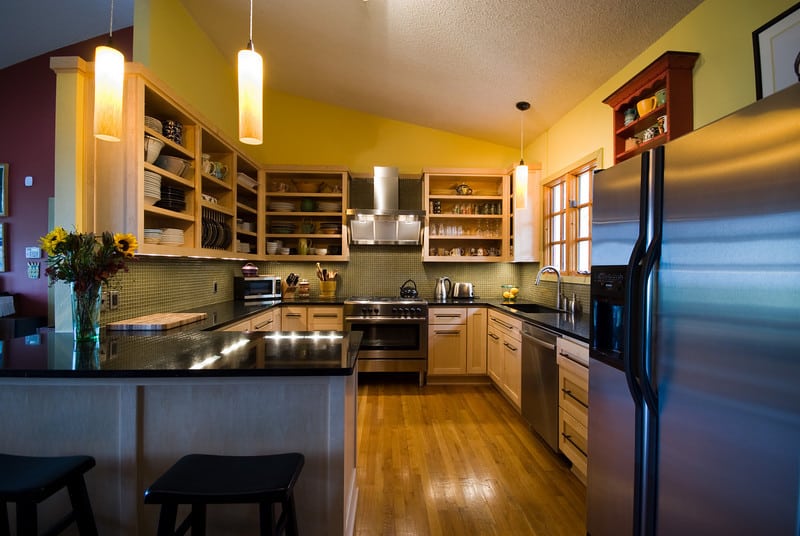
Soapstone’s resistance to heat and water, along with a muted color palette and subtle veining, makes it an appealing alternative to granite and marble. It offers a softer, more understated look than either. As with all natural stone, it does require some care.
Pros of soapstone countertops
- Resists heat and water
- Color tends to be uniform throughout the slab, and it works well for integrated sinks if you want a blended look
- Naturally dense, so it resists staining better than many porous stones
Cons of soapstone countertops
- Scratches easily and will show stains, which can be sanded out
- Could crack or chip if you aren’t careful when working on it
- Requires regular sealing and will show stains if not wiped up immediately
- Develops a patina over time, which you may or may not like
Solid Surface Countertops
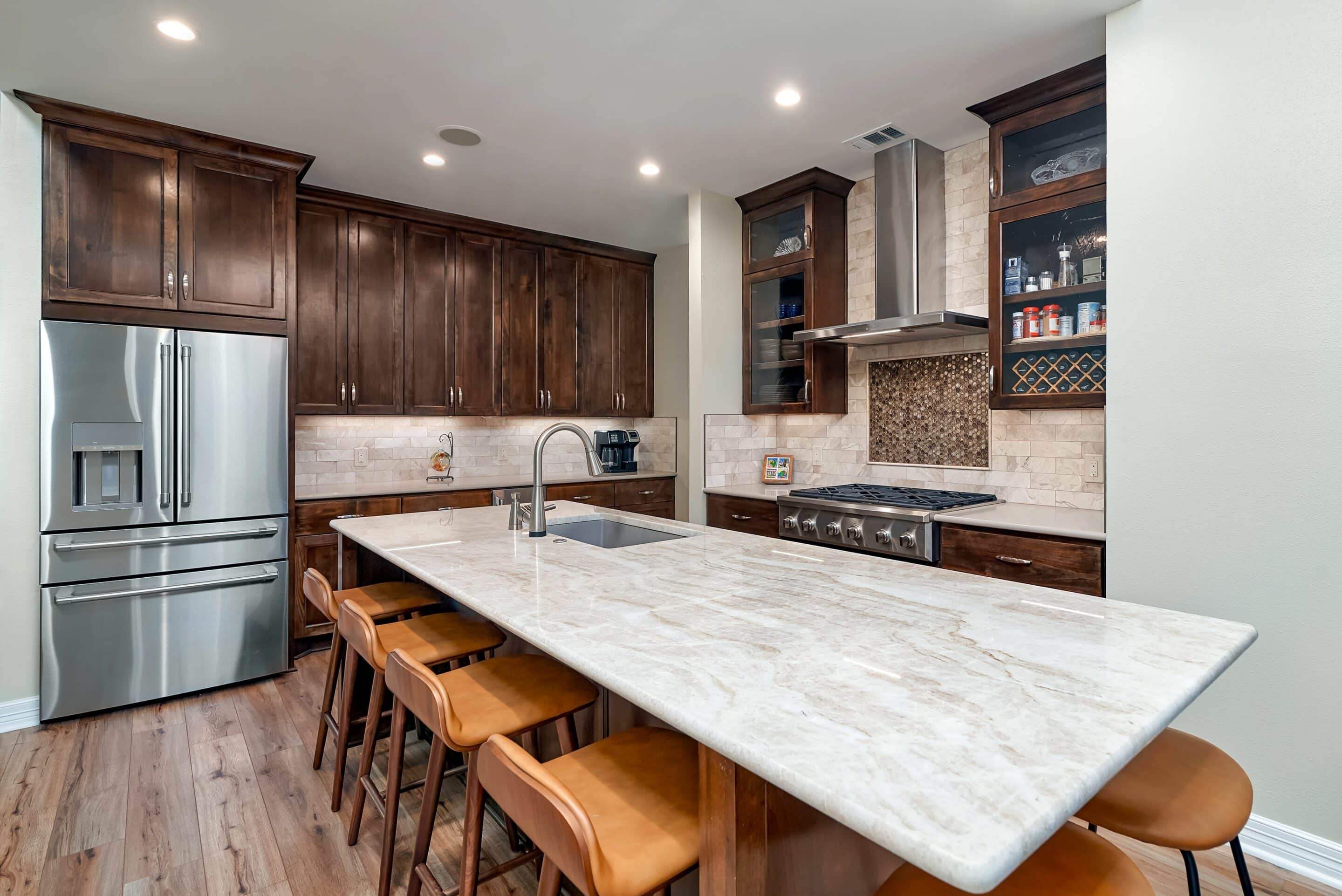
Twenty years ago, solid surfacing was the darling in the world of kitchen countertops. It still deserves consideration, as many qualities have been improved upon over time by brands like Corian. It is heat- and stain-resistant and comes in a wide range of looks, including faux stone, and lots of fashion colors. Because it has a little give, due to it being made of acrylic or polyester or a blend of the two, objects dropped on solid surface countertops are less likely to break. It also can be molded into many shapes, including intricate inlays, edge and backsplash treatments, as well as furniture.
Pros of solid surface countertops
- Resistant to heat, moisture, and fading
- Enormous choice of colors and patterns, including custom options
- Seams fuse so joints don’t show
- Molds into just about any shape including integrated backsplash or sinks
- Does not require sealing and can be cleaned with mild detergent
Cons of solid surface countertops
- Can’t take high heat or it will lose its shape
- Vulnerable to scratches, cuts, and prolonged exposure to stains such as wine or ketchup, therefore, the material requires the use of a cutting board
- Faux stone looks don’t exactly resemble stone
- Not recyclable
Stainless Steel Countertops
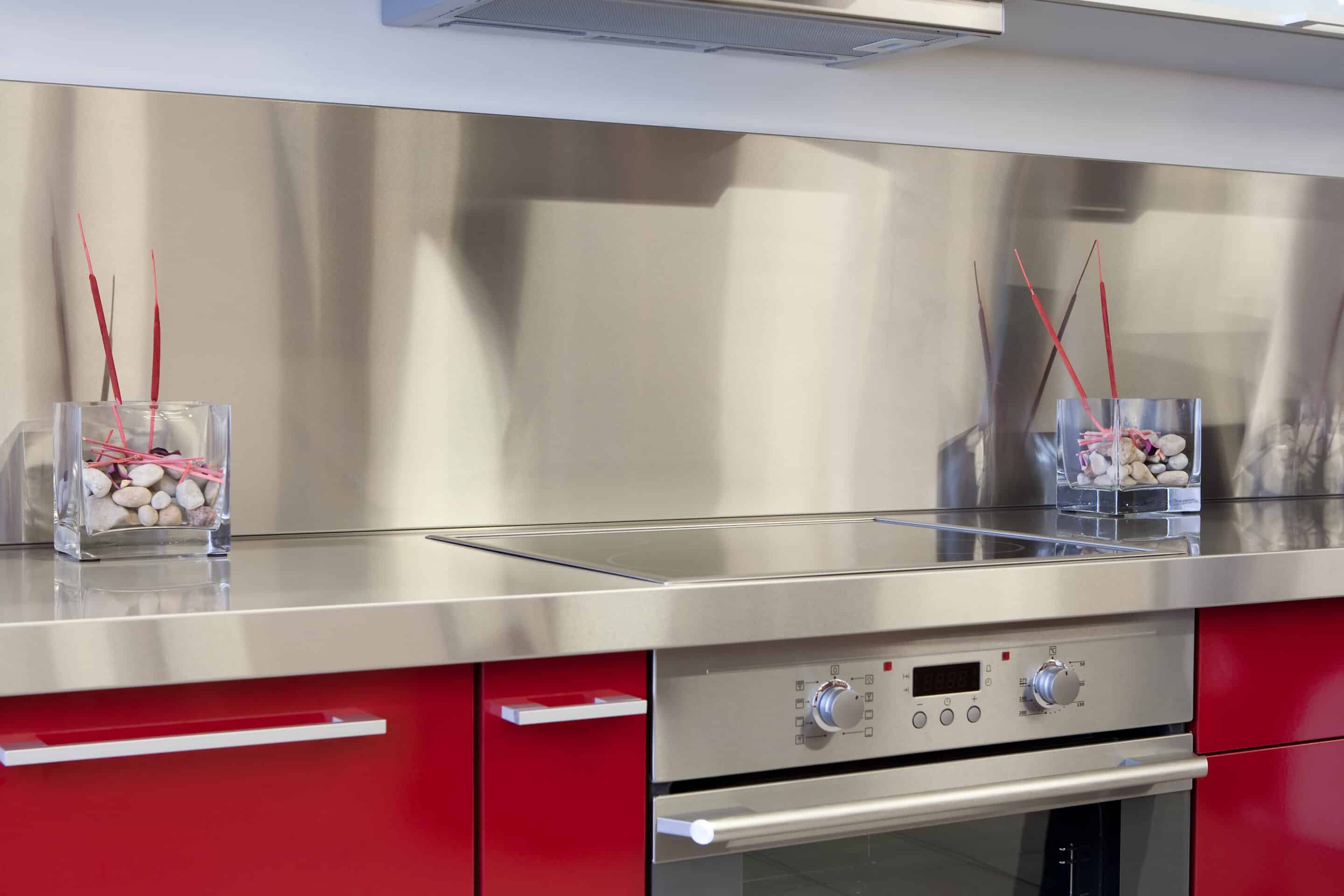
Stainless steel countertops are commonly used in commercial kitchens but have also found a home in more modern designs. This is because stainless steel can take a beating from knives to high heat to most spills and is completely anti-bacterial. You must avoid caustic chemicals, but since it’s water- and stain-proof, that’s not an issue unless you use it for something other than food prep.
Stainless steel countertops come in several finishes, including polished and brushed, which help hide scratches. Dings and dents will show up and are impossible to remove without displacing the countertop. But if you want a pro-style countertop, those battle scars can be shown with pride for a kitchen connoisseur.
Pros of stainless steel countertops
- Super-resilient material is water-, stain-, fade-proof, and resists bacteria
- No need for sealing and can be cleaned and sterilized with simple detergent and water
- Integrates seamlessly with features like drainboards, sinks, and backsplashes
- Manufactured to exact specifications, so potentially seamless
Cons of stainless steel countertops
- Not suitable for cutting so a cutting board must be used to protect the material from knives
- Shows the smallest scratches and dents, which are very hard to remove
- Noisy when kitchen tools come in contact
- Custom fabrication is involved, so it’s best specified as part of a designed kitchen
Remodeling Kitchen Countertops with New Creations
While we encourage everyone to do their research and think about how their selections fit their lifestyle, we know this is a big decision. We help homeowners at every stage of a remodel, from design to picking the perfect countertop. Need a super-durable surface? Look at quartz or granite. Want a luxurious, classic look? Marble is worth considering. Prefer warmth or an industrial edge? Wood or stainless steel deliver.
We’ve been helping Austin homeowners build their dream kitchens since 2006, and we work with quality materials from makers like Caesarstone, Silestone, Dekton, and Della Terra.
Ready to Jump In?
As a design-build contractor, New Creations has focused on kitchen and whole-home remodeling in Austin since 2006. See countertops in finished kitchens in our portfolio, and when you’re ready, get started — we’ll happily help you decide the best approach for your renovation.
FAQ| Popular Types of Kitchen Countertops
What is the most popular kitchen countertop material?
Engineered quartz is the most popular, followed closely by granite. Quartz wins on low maintenance; granite wins on natural, one-of-a-kind character.
Is quartz or granite better?
Neither is “better” — they’re different. Quartz is non-porous and never needs sealing, making it the lowest-maintenance option. Granite is natural stone with unique patterning and excellent heat resistance, but it needs periodic sealing.
What is the most durable kitchen countertop?
Engineered quartz and stainless steel are the most durable for everyday use. Quartz resists stains, scratches, and bacteria without sealing; stainless is nearly indestructible but shows scratches and dents.
Which countertops need the least maintenance?
Quartz, solid surface, and stainless steel require no sealing and clean up with mild detergent. Natural stones — granite, marble, soapstone — need periodic sealing or oiling.
More Posts

Tips for an Efficient and Smooth Luxury Condo Renovation
Updated August 2026 A luxury condo renovation is not the same as remodeling a single-family home. The three things that decide whether it goes...

Design-Build: The Benefits That Keep Your Renovation Sane
Updated August 2026 The biggest benefit of design-build is simple: one team handles your design, architecture, and construction under a single...

Home Renovation Budget: Why Projects Go Over (and How to Stay on Track)
Updated August 2026 Why a Home Renovation Budget Goes Over — and How to Prevent It Setting a realistic home renovation budget is the single best...