
6 Reasons to Consider Whole-House Remodeling in Austin
Written By Roy Faust
Updated August 2026
Thinking about whole-house remodeling in Austin? The first big decision isn’t tile or paint — it’s whether to remodel the whole house at once or one room at a time. Long before you lose yourself in tile options and paint colors, that’s the choice to make.
Think of Barton Springs. You can inch into that 68-degree water bit by bit, or jump in all at once. Either way you end up in the same place — but “a little at a time” takes far longer, with more pain points, and you feel the cold a lot more. Here are six reasons a whole home remodel often beats going room by room.
The honest test is simple: if there’s only one room you’d change and you’re happy with everything else, remodel that room. But if fixing one space would leave the rest of the house feeling dated by comparison — or if the layout itself isn’t working — that’s when doing it all at once tends to save you time, disruption, and second-guessing down the road.
Whole-House Remodeling: When Diving in Beats Dipping a Toe
Whole-house remodeling makes no sense if you love everything about your home except one room. But that’s rarely the case — especially in a market like Austin, where the best buys are homes with good bones that badly need updating, or older, smaller homes that need expanding and modernizing.
Often, homeowners choose the one-room-at-a-time approach to renovations because they’ve not done much remodeling and want to see how it goes before committing to more. Or they feel going room-by-room will somehow be less expensive and/or less disruptive. And sometimes, their intent really is to just do one room, but once completed, they see more possibilities.
1. One Set of Fixed Steps, Not Six
Every remodeling project carries the same fixed steps no matter its size: site visits, permitting, scheduling, ordering materials, coordinating trades, demolition setup, dumpster rental. Whole-house remodeling means handling those once instead of repeating them for every room, one at a time, over years. It’s simply more efficient to plan, order, and coordinate a single project than to restart the same machinery again and again.
2. The Domino Effect: One New Room Makes the Rest Look Tired
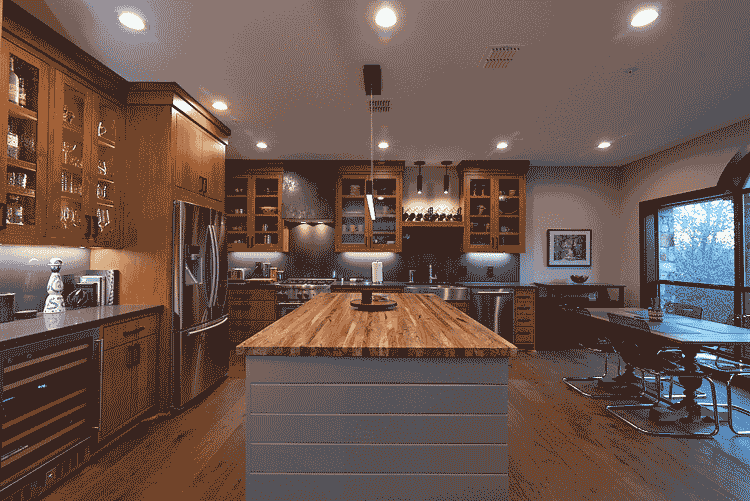
With so many Austin homes built in the ’90s and 2000s, all it takes is a fresh kitchen or bath and suddenly the rest of the house that looked “fine” now feels dated. Unless you’re certain you want to keep the rest of the home as-is for a long time, it’s worth at least considering the whole picture.
This is where an experienced design-build contractor earns its keep. When the designer is also the builder, they can look at your home as a whole, help you expand a one-room vision into the rest of the house, and show you how to execute it all at once.
3. Open-Concept Homes Are Hard to Remodel in Pieces
Most Austin homes built after the 1970s are open concept — kitchen, dining, and living all part of one great room. That’s wonderful for family life and entertaining. But it makes remodeling “just the kitchen” tricky.
In an open concept, flooring usually runs throughout the space. So does paint, trim, and accents. Remodeling one zone means touching everything around it — and doing that piecemeal drags out the disruption in the most-used part of your home.
4. Less Total Disruption to Your Life
Any good contractor works to limit the chaos that comes with renovation. In whole-house remodeling there’s real disruption, but it happens once — and you and your contractor plan how to live around it while the work happens together.
Remodel a room at a time and the disruption rises, falls, then rises again with the next space. Every room repeats the full sequence — permitting, demolition, framing, plumbing, electrical, HVAC, inspections, drywall, paint, finishing. The total time your family lives in a construction zone ends up far longer.
5. A Cohesive Look Throughout
“Cohesive aesthetic” sounds like HGTV-speak, but it just means your home reads as one seamless, balanced space that reflects your taste throughout — not a patchwork of rooms done in different years. Nearly everyone wants that, and piecemeal renovations make it much harder to achieve.
6. A Design-Build Team Can See the Whole House at Once
When one team designs and builds, they can plan every room around the others from day one — the same materials, the same flow, the same vision — instead of stitching together projects done years apart. It’s the difference between a home that feels designed and one that feels assembled.
You can see this approach across our whole-home work — projects like our Rollingwood whole-house renovation and Onion Creek whole-house renovation, where planning every room together produced one cohesive result rather than a patchwork of updates done years apart.
Ready to Jump In?
As a design-build contractor, New Creations has focused on whole-house remodeling in Austin since 2006. See finished whole-home projects in our portfolio, and when you’re ready, get started — we’ll help you decide the best approach for your renovation.
FAQ: Whole-House Remodeling
Is it better to remodel a whole house at once or one room at a time?
Whole-house remodeling is usually more efficient and less disruptive overall — you handle permitting, setup, and coordination once instead of repeating them, and you avoid the “domino effect” of a new room making the rest look dated. Room-by-room can spread out disruption but often lengthens the total timeline.
Is whole-house remodeling worth it in an open-concept home?
Often, yes. In open-concept homes the flooring, paint, and trim usually run continuously, so remodeling one area means touching everything around it anyway — which makes a coordinated whole-home approach more practical.
What’s the advantage of using a design-build contractor for a whole-house remodel?
One team designs and builds, so they can plan every room around the others for a cohesive result, and you have a single point of accountability from design through construction rather than coordinating separate designers and builders.
More Posts

How to Choose a Remodeling Contractor in Austin
Updated August 2026 Wondering how to choose a remodeling contractor in Austin? It comes down to one question most homeowners skip: does your project...

Steampunk Kitchen Makes a Comeback
Updated August 2026 Steampunk Kitchen Makes a Comeback You’ve been looking at kitchen pictures, one after another, to see what you’d like to infuse...

The Ultimate Cleaning Schedule for Refrigerator Maintenance and Care
Refrigerators are one of the most expensive and frequently used appliances in your home. As with anything that get plenty of use and is rarely...